

رؤى رئيسية:
- Coinbase CEO Brian Armstrong disputes WSJ blame, saying his objections improved the CLARITY Act.
- Stablecoin rewards divided Coinbase and banks during crypto bill negotiations.
- The Senate setback shifts focus to regulators as Alderoty urges crypto unity.
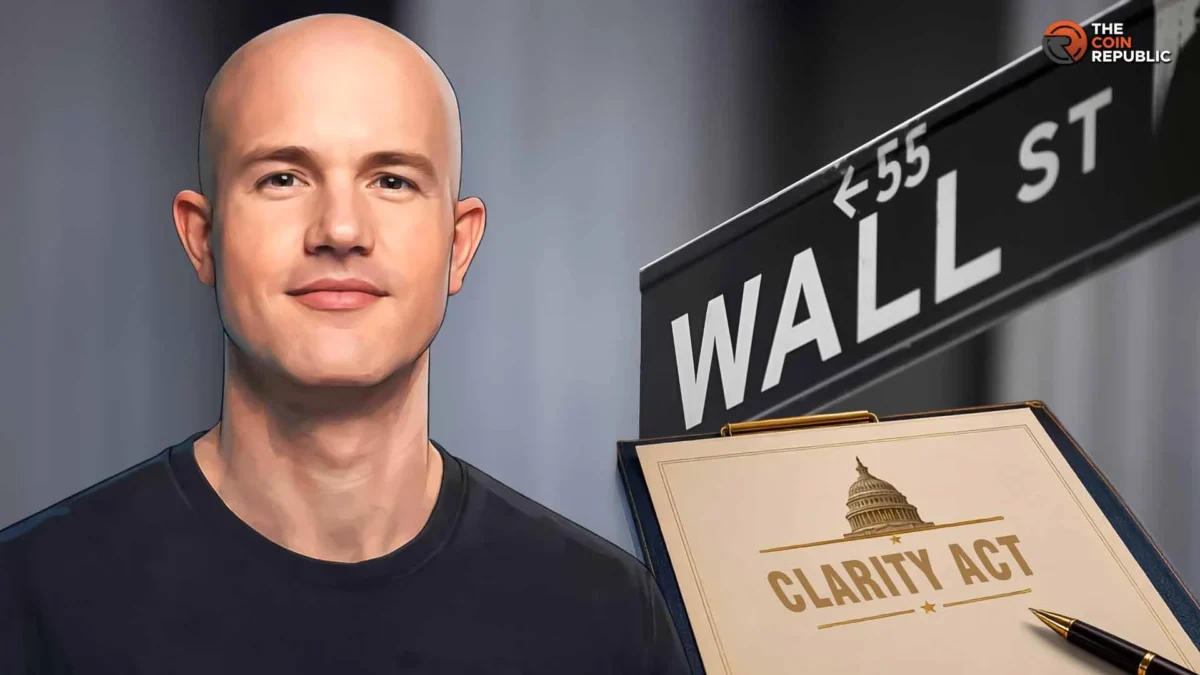
Coinbase CEO Brian Armstrong challenged The Wall Street Journal over a planned story linking him to the CLARITY Act’s failure.
He said the newspaper intended to blame him and Coinbase despite his support for the final Senate draft. His response centered on why he opposed an earlier version and later backed the revised legislation.
The dispute follows the Senate’s September 15 procedural vote, which left the crypto market structure bill stalled.
Senators voted 49-50 against advancing H.R. 3633, falling 11 votes short of the required threshold. The legislation sought to establish a federal framework defining agency responsibilities for digital asset markets.
Coinbase CEO Defends Earlier CLARITY Act Opposition
Armstrong إن his January objections targeted four areas: decentralized finance, tokenization, Commodity Futures Trading Commission authority, and stablecoin rewards.
He argued that the draft contained provisions that would harm crypto and lacked sufficient support. According to Armstrong, subsequent negotiations addressed all four concerns before the bill advanced through committee roughly four months later.

He described that intervention as one step toward producing legislation he could support. Armstrong said he strongly backed the final Senate draft and would challenge the earlier version again. His account distinguished his opposition to specific provisions from his support for federal crypto legislation.
ال Coinbase CEO also accused the Journal of repeating banking industry arguments and taking direction from bank lobbyists.
Those accusations reflect Armstrong’s characterization of the newspaper’s reporting and its planned story. In his post, he maintained that his earlier objections helped improve the bill.
Stablecoin Rewards Divide Coinbase and Banks
The disagreement over stablecoin rewards formed part of Coinbase’s broader negotiations with the banking industry this year.
Coinbase sought permission for third-party platforms to offer customers yield on idle stablecoin balances. Banks argued that those products resembled regulated banking services.
Meanwhile, Armstrong and Coinbase spent years pursuing legislation through Washington lobbying and political campaign spending through FairShake.
Despite those efforts, the bill encountered additional disagreements, including proposed ethics restrictions concerning government officials’ digital asset profits.
Its Senate setback prompted industry participants to reconsider their immediate regulatory priorities.
Brian Armstrong afterward said he would assume the legislation was “dead,” while identifying regulators as another route forward.
The Coinbase CEO pointed specifically to the Securities and Exchange Commission and the CFTC. However, seven Democratic senators said bipartisan negotiations would continue after the failed procedural vote.
Regulatory Action and Industry Coordination Draw Focus
The SEC announced a five-year exemption Thursday allowing U.S. trading venues to offer tokenized stocks under specified conditions.
Those conditions include giving public companies 30 days’ notice before trading begins. Separately, the CFTC approved Kalshi to list perpetual futures tied to precious metals last week.
Coinbase also seeks to offer perpetual futures linked to other assets, including individual stocks and indexes.
Citizens Bank analyst Devin Ryan said the legislative setback could accelerate near-term crypto regulation. Other analysts warned that reliance on agencies leaves regulatory interpretations vulnerable to changes between administrations.
Alongside that regulatory shift, Ripple Chief Legal Officer Stuart Alderoty urged crypto companies to coordinate their Washington messaging.
In a September 17 post, he said “politics beat policy this week” and criticized competing industry messages. Alderoty, also president of the Ripple-funded National Cryptocurrency Association, called for the sector to “speak with one voice.”
نشر مقال Coinbase CEO Hits Back at WSJ Over CLARITY Act Blame أولاً على ذا كوين ريبابليك.


 روبام روي


 جلوري كابورو