

أهم النقاط
- تركزت أخبار Ripple على اعتماد بنك Jeonbuk لـ Ripple Payments في كوريا.
- حصل البنك على تسوية عبر الحدود شبه فورية وعلى مدار الساعة طوال أيام الأسبوع.
- أضافت Ripple شراكتها المالية الكورية الثالثة هذا العام.
وسعت Ripple وجودها في القطاع المصرفي الكوري الجنوبي في 18 أغسطس من خلال شراكة جديدة مع بنك Jeonbuk. أصبح البنك أول مقرض إقليمي في كوريا يستخدم Ripple Payments لتحويلات الأعمال عبر الحدود. قالت Ripple إن الخدمة ستوفر تسوية شبه فورية وتعمل على مدار الساعة.
كانت الصفقة مهمة لأنها وسعت استراتيجية Ripple المؤسسية إلى ما هو أبعد من الحفظ والرمزنة. انضم بنك Jeonbuk إلى Kyobo Life Insurance وKbank كثالث شريك مالي لكريبل هذا العام في كوريا. كما وضعت الاتفاقية المدفوعات المشفرة ضمن حالة استخدام مصرفية منظمة تركز على التحويلات التجارية.
أخبار Ripple: بنك Jeonbuk يضيف تسوية شبه فورية
قالت Ripple إن بنك Jeonbuk سيستخدم Ripple Payments للتحويلات التجارية الدولية. تستهدف الخدمة شركات الاستيراد والتصدير، وشركات التكنولوجيا الناشئة، ومنشئي المحتوى عبر الإنترنت. قالت Ripple إن هؤلاء العملاء اعتمدوا تاريخيًا على تحويلات قد تستغرق أيامًا.
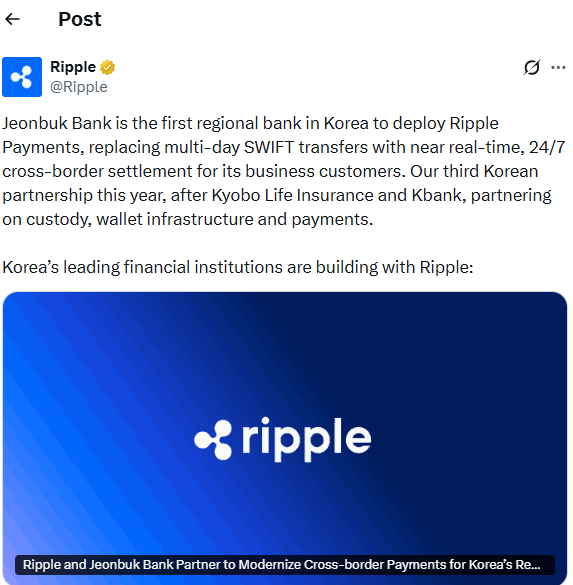
وصفت الشركة بنك Jeonbuk بأنه أول بنك إقليمي في كوريا ينفذ منتج المدفوعات. قالت Ripple إن التسوية يمكن أن تكتمل خلال ثوانٍ إلى دقائق وتظل متاحة على مدار الساعة طوال أيام الأسبوع. وصف بارك تشون-وون، رئيس بنك JB Jeonbuk، الشراكة بأنها جزء من استراتيجية البنك للتمويل الرقمي.
عرضت Ripple التنفيذ مقارنة بالتحويلات المصرفية التقليدية عبر المراسلين. ومع ذلك، أظهرت بيانات Swift الحالية أن المقارنة تحتاج إلى سياق. قالت Swift إن ما يقرب من 60% من مدفوعات Swift GPI وصلت إلى المستفيدين النهائيين خلال 30 دقيقة. وأكملت تقريبًا جميعها خلال 24 ساعة.
هذا التمييز مهم في نقاش مدفوعات العملات المشفرة. ميزة Ripple تكمن في توفر التسوية المستمرة والتنقل عبر البلوكشين عبر المسارات المدعومة. هذا لا يعني أن كل تحويل تقليدي مرتبط بـ Swift يستغرق عدة أيام.
أخبار Ripple تبني على صفقات Kbank وKyobo Life
اتفاقية Ripple مع Jeonbuk جاءت بعد شراكتين مؤسستين كوريّتين منفصلتين أُعلنتا في أبريل. تلك الصفقات غطت أجزاء مختلفة من بنية الشركة التحتية المالية.
في 15 أبريل، أعلنت Ripple عن شراكة مع Kyobo Life Insurance. بدأت الشركات في استكشاف تسوية سندات الحكومة الكورية المرمزة باستخدام Ripple Custody. قالت Ripple إن المشروع سيختبر الاحتفاظ بالأصول المرمزة ونقلها وتسويتها ضمن بيئة مؤسسية منظمة.
كما خططت Kyobo Life لتقييم طرق الدفع المستندة إلى العملات المستقرة خلال المشروع. قالت Ripple إن تسوية سندات الحكومة التقليدية عادة ما تستغرق يومين. النموذج المقترح على البلوكشين يهدف إلى تقريب المعاملات من التسوية الفورية.
ثم أعلنت Ripple عن شراكتها مع Kbank في 29 أبريل. أصبح Kbank أول بنك كوري يعمل عبر الإنترنت فقط يعتمد على بنية Ripple Custody كخدمة محفظة. ركز الاتفاق على المحافظ المؤسسية، إدارة الأصول الرقمية، وتقنية الحساب متعدد الأطراف.
ربط الرئيس التنفيذي لـ Kbank، تشوي وو-هيونغ، تلك البنية التحتية بقدرات التحويل عبر العملات المستقرة المستقبلية. قالت Ripple إن التطبيق يمكن أن يدعم الحفظ، عمليات المحافظ، والخدمات المالية القائمة على البلوكشين. هذا جعل Kbank أوسع من مجرد دمج مدفوعات عبر الحدود.
دفع مدفوعات العملات المشفرة يمتد عبر استراتيجية Ripple في كوريا
أظهرت الاتفاقيات الثلاث استهداف Ripple لوظائف مؤسسية منفصلة في كوريا. ركزت Kyobo Life على تسوية الأوراق المالية المرمزة. تبنى Kbank بنية الحفظ والمحافظ. نقل Jeonbuk Bank مدفوعات Ripple مباشرة إلى التحويلات التجارية.
تستخدم Ripple Payments بنية البلوكشين والأصول الرقمية لدعم التحويلات عبر الحدود. قالت وثائق منتج Ripple إن المعاملات يمكن أن تُسوى خلال سجل XRP ثلاث إلى خمس ثوانٍ. كما تدعم المنصة التشغيل المستمر خارج ساعات العمل المصرفية التقليدية.
تعطي البنية Ripple عدة طرق للدخول إلى المؤسسات المالية المنظمة. يمكن للبنوك اعتماد المدفوعات دون نشر نفس المنتجات المستخدمة للحفظ أو الأصول المرمزة. ظهر هذا النهج المعياري في الشراكات الكورية الثلاث المعلنة هذا العام.
حصل Ripple USD أيضًا على وصول أوسع إلى البورصات الكورية قبل إعلان Jeonbuk. أدرج كشف أصول Bithumb في 29 يوليو تداول RLUSD على Bithumb وUpbit وCoinone وKorbit. كما فتحت Bithumb تداول الوون الكوري لـ RLUSD في ذلك اليوم.
ال عملة مستقرة الإدراج لا يثبت الاستخدام المباشر ضمن تطبيق مدفوعات Jeonbuk Bank. لم تحدد إعلان Ripple عن Jeonbuk أي أصل رقمي أو أصل تسوية سيستخدمه البنك. هذا التمييز يحد من الاستنتاجات حول طلب XRP أو RLUSD من الشراكة.
أخبار Ripple تضع تطبيق Jeonbuk تحت مراقبة السوق
المرحلة التالية ستكون إطلاق Jeonbuk Bank التشغيلي ونشاط المعاملات. لم تنشر Ripple أهداف حجم، أعداد العملاء، أو جدول إطلاق منفصل بعد إعلان 18 أغسطس.
سيراقب المستثمرون أيضًا تفاصيل المسارات المدعومة وأصول التسوية. ستُظهر هذه الإفصاحات مدى استخدام Jeonbuk Bank لـ Ripple Payments. كما ستوضح كيف يتناسب التطبيق الكوري مع استراتيجية Ripple الأوسع لمدفوعات العملات المشفرة.
نشر مقال أخبار Ripple: بنك Jeonbuk يعتمد Ripple لتحويلات أسرع أولاً على ذا كوين ريبابليك.


 روبام روي

 جلوري كابورو