

Wichtige Erkenntnisse:
- Warren Buffett stepped down as Berkshire Hathaway chairman on Sept. 18.
- Howard Buffett became chairman while Greg Abel remained chief executive.
- Abel now controls Berkshire Hathaway’s investment and capital-allocation decisions.
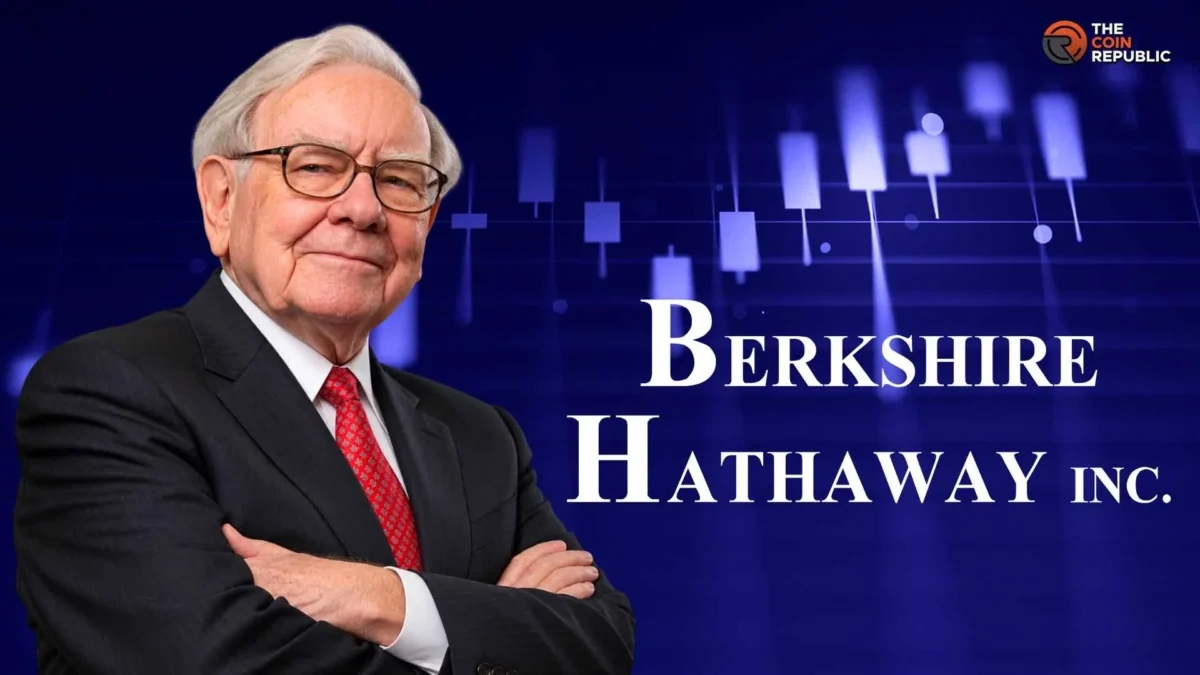
Warren Buffett stepped down as Berkshire Hathaway chairman on Sept. 18, ending six decades of leadership. The board elected his son, Howard G. Buffett, chairman, while Greg Abel remained president and chief executive officer.
Buffett became chairman emeritus and remained a Berkshire director. The transition separated board leadership from management while leaving investment and capital-allocation authority with Abel.
Warren Buffett Exit Completes Berkshire Hathaway Succession
Berkshire Hathaway said Buffett became chairman emeritus and remained a director. Howard Buffett, a director since 1993, succeeded him under the company’s succession plan.

Buffett told shareholders that Abel had already taken control of Berkshire’s key decisions. He said Abel had exceeded the expectations set before taking the chief executive role.
The transition followed a separate executive handover earlier this year. Berkshire’s 2025 Form 10-K said Abel became chief executive officer on Jan. 1, 2026.
That filing assigned major investment and capital-allocation decisions to Abel. Ajit Jain continued leading insurance operations, while other operating executives reported through Berkshire’s decentralized structure.
The board had approved Abel’s appointment unanimously on May 4, 2025. Berkshire disclosed that decision through a Form 8-K filed with the Securities and Exchange Commission.
Berkshire later amended its bylaws to separate chairman and chief executive responsibilities. The company disclosed that a governance shift occurred in an October 2025 Form 8-K.
Berkshire Hathaway Gives Abel Control of Capital Allocation
Berkshire’s latest quarterly filing showed the scale of capital now under Abel’s direction. Total assets reached $1.263 trillion on June 30, up from $1.222 trillion at year-end 2025. Insurance and other businesses held $359.2 billion in cash, equivalents, and U.S. Treasury bills. Berkshire also held $323.78 billion of equity securities across those operations.

The company acquired $4.8 billion of treasury stock during the first half of 2026. Most purchases occurred during the second quarter, Berkshire’s filing showed. Berkshire’s repurchase policy links buybacks to management’s estimate of intrinsic value. The company also requires consolidated cash and Treasury holdings to remain above $30 billion.
Capital deployment extended beyond repurchases. Berkshire completed its roughly $9.4 billion acquisition of OxyChem on Jan. 2. It later acquired Taylor Morrison Home Corporation for approximately $6.8 billion on July 24. Those transactions gave investors early evidence of Abel’s acquisition strategy.
Berkshire reported shareholders’ equity of $747.9 billion at June 30. First-half net earnings attributable to shareholders reached $35.8 billion.
Insurance float reached approximately $177.5 billion by June 30, rising $1.1 billion from year-end. Berkshire also reported $43.3 billion of borrowings outside Berkshire Hathaway Energy and BNSF. Berkshire’s own outstanding debt stood at $20.4 billion. That balance has fallen by $2.3 billion since December 2025, mainly after debt repayments and currency movements.
However, Berkshire warned that investment gains can create volatility in reported earnings. First-half results included about $11.4 billion of after-tax investment gains.
Warren Buffett Leaves a High Performance Benchmark
Berkshire’s 2025 annual report documented the investment record preceding the transition. Berkshire’s per-share market value compounded at 19.7% annually from 1965 through 2025.

The Standard & Poor’s 500 produced a 10.5% annualized return with dividends during that period. Berkshire reported an overall gain of 6,099,294% from 1964 through 2025. Those figures set a demanding historical comparison for management. They do not indicate how Berkshire will perform under Abel and Howard Buffett.
The company’s structure also limits direct comparisons with earlier decades. Berkshire now owns large insurance, railroad, energy, manufacturing, service, and retail operations. Its scale affects how management can deploy capital. Even multibillion-dollar transactions represent a smaller share of Berkshire’s asset base than decades ago.
Abel now controls the investment and capital-allocation decisions that Berkshire identified as key-person responsibilities. Howard Buffett’s chairmanship places board oversight under a separate executive structure.
Susan Decker remained Berkshire’s lead independent director after the Sept. 18 board action. Warren Buffett stayed on the board and retained the title of chairman emeritus.
Berkshire Hathaway Faces Its Next Post-Buffett Test
Berkshire did not announce another leadership deadline in its Sept. 18 statement. The immediate governance transition, therefore, centered on Abel, Howard Buffett, and Decker.
The next scheduled financial checkpoint will be Berkshire’s third-quarter filing. Investors can then assess cash levels, repurchases, acquisitions, and portfolio movements under the new structure.
This article is for informational purposes only and does not constitute financial or investment advice. Stock investments involve risk, and past performance does not guarantee future results. Readers should conduct their own research before making investment decisions.
Der Beitrag Warren Buffett Steps Down as Berkshire Chairman After 61 Years erschien zuerst auf The Coin Republic.

 Glory Kaburu
 Godfrey Benjamin

 Rupam Roy