
Wichtige Erkenntnisse:
- The MetaMask security alert outlines the precautionary exits of affected staking validators.
- Lido expects affected validators to complete exits by October 7, before full withdrawals.
- Lido says stETH holders need no action, though exits could reduce staking rewards.
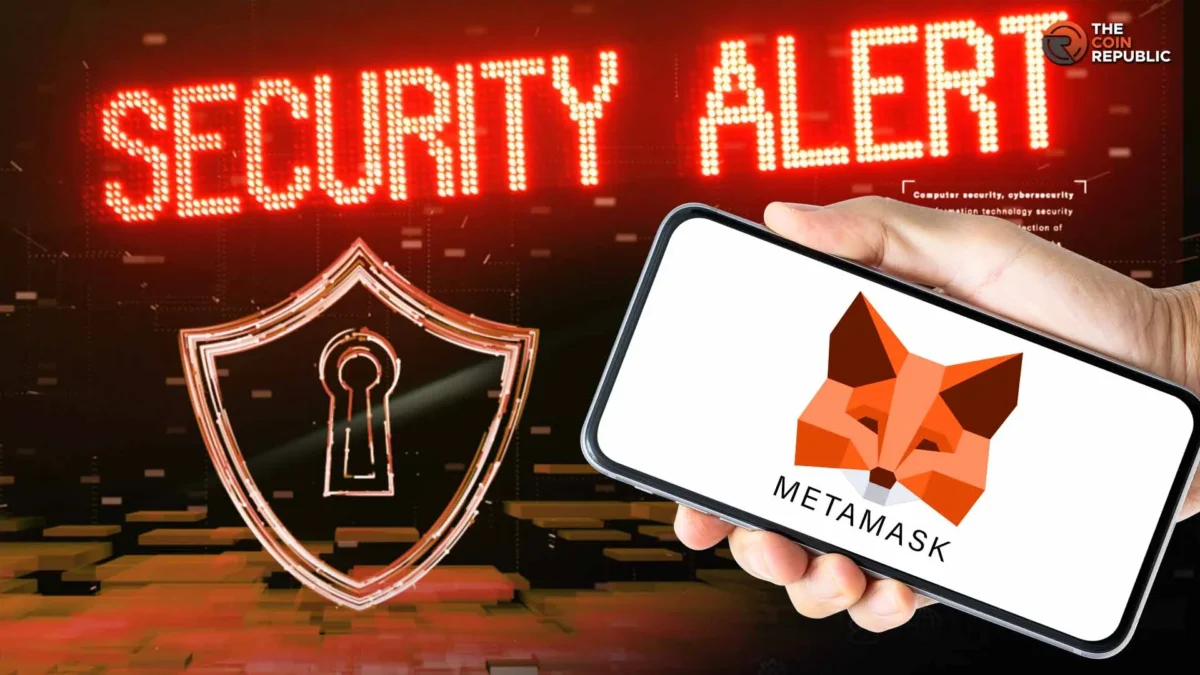
MetaMask security alert has prompted precautionary exits of affected Ethereum staking validators following an incident involving part of its infrastructure.
The company said it had identified no immediate threat to wallets and was preparing its response with clients and security advisers. Meanwhile, Lido expects affected validators within its protocol to complete their exit stage by October 7, 2026.
MetaMask Security Alert Triggers Precautionary Validator Exits
MetaMask kündigte Ripple the response on September 30. It stated the measures covered validators within its non-custodial staking operations.

Its website reports more than $3 billion in staked Ether managed through its infrastructure. The company said it was working with external partners as remediation continued.
Lido subsequently described the issue as an “infrastructure compromise” in a September 30 governance forum disclosure.
Following the MetaMask security alert, MetaMask validators operating within Lido have started exiting, although completing that stage differs from completing withdrawals. The protocol expects ETH to be returned gradually as validators progress through the required stages.
Those stages include exit, withdrawal, and eventual re-entry into Ethereum’s validator system. According to Lido, the entire process could take approximately 45 days due to Ethereum’s extended entry queue.
Consequently, the October 7 estimate covers validator exits rather than the entire operational cycle.
The MetaMask security alert affects an operation previously known as Consensys Staking. Earlier in September, Consensys Software announced plans to adopt the MetaMask name and separate certain businesses.
The proposed separation would place protocols and institutional infrastructure under a newly formed Consensys company by year-end.
Lido Details Reward Risks and Holder Guidance
For stETH holders, Lido’s instruction was direct: “No action is required from stETH holders.” However, the exit process could produce foregone staking rewards and downtime penalties. Those penalties could arise if affected MetaMask staking validators go offline before completing their exits.
Lido linked potential downtime to efforts to reduce risks associated with network penalties. Its disclosure discussed those penalties as possible consequences of the response. The protocol reported no validator slashing in the supplied update.
Alongside that guidance, Lido highlighted its distributed operator structure and reserve arrangements. The protocol reports more than 600 operators across its staking modules. Its ad hoc reserve holds over 6,750 stETH to help absorb operational disruptions.
Lido also introduced Curated Module v2 in July as part of its validator infrastructure overhaul. That update added support for higher effective validator balances. It also introduced mechanisms addressing operator accountability and penalties.
Withdrawal Controls and Aave Operations Remain in Focus
The MetaMask security alert also highlighted the differences between validator duties and withdrawal controls. MetaMask says its staking operation upholds infrastructure and signs validator duties without managing client withdrawal keys.
Its documentation describes direct validator staking as self-custodial, with users retaining control over their stake and rewards. Lido applies a related separation through protocol-set withdrawal credentials and operator-generated signing keys.
Signing keys support validator duties, while withdrawal credentials determine where ETH is sent. Regarding MetaMask wallet security, the company’s statement identified no immediate threat to wallets at the time.
Separately, Aave founder Stani Kulechov said on October 1 that Aave markets remained unaffected and functions operated normally.
He said he was monitoring developments involving MetaMask Staking and Lido. As the MetaMask security alert response continued, Lido said investigators were examining the incident and promised further updates.
Der Beitrag MetaMask Security Alert Prompts Affected Ethereum Validators to Exit erschien zuerst auf The Coin Republic.


 Rupam Roy
 Godfrey Benjamin