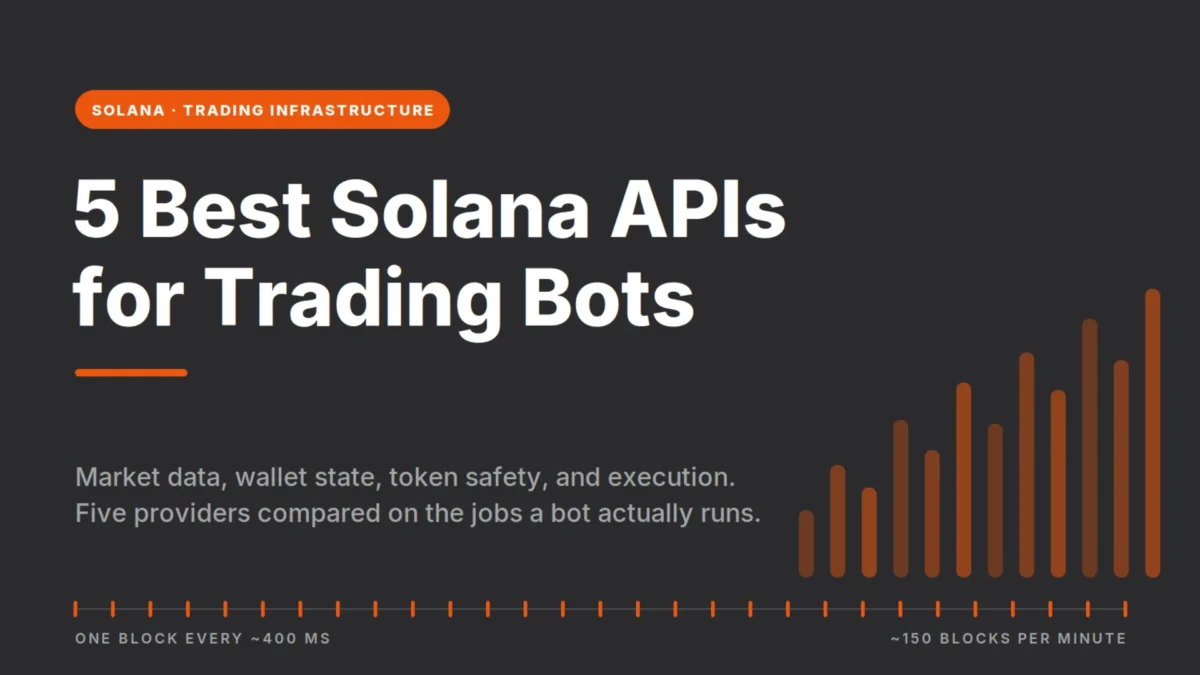
Solana produce un blocco circa ogni 400 millisecondi. Un bot di trading deve stare al passo. La maggior parte resta indietro a livello di dati.
Nessuna API singola fa tutto il lavoro. Questa guida copre cinque provider, ognuno gestisce una parte di un bot funzionante. L’obiettivo è mostrare quale livello gestisce ciascuno.
Cosa fa realmente un’API Solana?
Un’API Solana si interpone tra il tuo bot e la rete. Il tuo codice invia una richiesta. L’API restituisce JSON.
Questa descrizione nasconde una vera divisione. Alcuni provider gestiscono nodi. Altri indicizzano e arricchiscono ciò che quei nodi producono. Alcuni si occupano dell’esecuzione anziché dei dati.
La divisione è più importante su Solana che altrove. I dati grezzi degli account arrivano codificati in base64 tramite l’interfaccia JSON-RPC standard. Prezzi e metadati dei token non sono inclusi. Scrivi tu il parser o usi un provider che l’ha già fatto.
I bot lo percepiscono subito. Un segnale è inutile se il saldo su cui si basa è obsoleto.
La stessa divisione si riscontra in generale nelle crypto.

La struttura del bot di trading Solana
Cinque livelli stanno sotto un bot funzionante. Ognuno risponde a una domanda diversa, nessun provider copre tutti e cinque. La maggior parte dei team parte da due livelli e aggiunge gli altri sotto pressione. L’ordine qui segue la funzione di ciascun livello.

Come scegliere quello giusto
Restringi il campo prima di confrontare le funzionalità.
Aggiornamento dati. I bot sniper richiedono aggiornamenti sotto il secondo. I bot di ribilanciamento tollerano qualche secondo di ritardo.
Lettura o scrittura. I provider di dati restituiscono lo stato. Quelli di esecuzione muovono fondi. Pochissimi fanno bene entrambi.
Carico di parsing. Chiedi cosa arriva già prezzato. Tutto il resto diventa codice da mantenere.
Modello di prezzo. Crediti, unità di richiesta, piani fissi e mance seguono logiche diverse di fatturazione.
Compatibilità AI. Il supporto MCP decide se un agente può interrogare direttamente il tuo stack.
Con questi filtri, ecco cinque API Solana da considerare.
1. CoinStats API
API Solana di CoinStats restituisce un wallet Solana come JSON strutturato. Inserisci un indirizzo e ricevi SPL token, SOL, transazioni e posizioni DeFi. Ogni elemento è valutato in USD.
Copertura su oltre 120 blockchain con un unico schema. Un bot che parte da Solana mantiene la stessa integrazione quando si espande.
Questa infrastruttura serve già 1 milione di utenti mensili. La posizione è chiara: è un'API dati, non un nodo RPC. Più ampia, migliore API Solana la panoramica mostra dove si colloca ogni tipo.
Per i bot, il valore è la consapevolezza delle posizioni. Saldi, posizioni DeFi aperte e PnL realizzato arrivano già analizzati.
Caratteristiche principali
- Dati wallet Solana. Saldi SPL token, SOL e cronologia completa delle transazioni. Swap e interazioni con programmi includono il valore in USD al momento del trasferimento.
- Posizioni DeFi, rilevate automaticamente. Staking, prestiti e posizioni LP su Marinade, Kamino, Orca e Raydium. Nessuna configurazione per protocollo.
- Analisi del portafoglio. Valore totale, allocazione, performance e PnL realizzato e non realizzato da un unico endpoint.
- Dati di mercato. Prezzi in tempo reale per oltre 100.000 monete su più di 200 exchange.
- CoinStats MCP Server. Oltre 20 strumenti per wallet e portafoglio con un solo URL OAuth. Funziona con Claude, Cursor, Claude Code, VS Code e N8N.
- Cross-chain di default. Oltre 120 blockchain e 10.000 protocolli DeFi sotto un unico schema.
- Tempi di risposta. Le chiamate live rispondono in circa 100-200 millisecondi.
Prezzi
Basato su crediti con un piano gratuito. 20.000 crediti gratuiti al mese per prototipi e produzione leggera. I crediti scalano con la complessità dell’endpoint, non con il numero di chiamate.
Dove si colloca
Bot consapevoli del portafoglio, dimensionamento delle posizioni e logica di rischio. Gestione multi-wallet, dashboard PnL e agenti AI che necessitano del contesto wallet.
Limitazioni
Nessun accesso a nodi RPC e nessuna trasmissione di transazioni. Solo lettura per progettazione. Gli sniper con requisiti di latenza critica necessitano ancora di un livello di streaming aggiuntivo.
2. Chainstack
Chainstack supporta app blockchain globali per fintech, DeFi, wallet, custodi e analisi. Offre RPC affidabile e prevedibile su oltre 70 protocolli, incluso Solana.
La scelta del nodo fa la differenza. I Global Nodes indirizzano ogni richiesta alla regione sana più vicina. I Dedicated Nodes operano su infrastruttura isolata. Disponibile anche il deployment self-hosted.
Per i bot, lo streaming è più importante del polling. Yellowstone gRPC Geyser invia eventi strutturati di account, transazioni e slot in tempo reale. Elimina completamente il ciclo di polling.
Caratteristiche principali
- Nodi su oltre 70 protocolli. Opzioni gestite e self-managed. Un unico fornitore copre Solana e qualsiasi altra espansione del bot.
- Streaming gRPC Yellowstone. Eventi Solana strutturati con latenza inferiore rispetto al polling RPC. A partire da 49$ al mese per uno stream.
- Global Nodes. Endpoint geo-bilanciati con routing automatico e failover.
- Dati archivio, debug e tracciamento. Disponibile nei piani a pagamento. Accesso archivio Solana da 49$ al mese.
- Server MCP ufficiale. Distribuisci nodi e interroga dati blockchain da Claude, Cursor e altri client agent.
- Conformità. Certificazioni SOC 2 Tipo II e ISO 27001, con SSO e accesso basato sui ruoli.
- Fatturazione crypto. Paga in SOL o in oltre 150 token.
Prezzi
Il piano Developer gratuito copre 3M unità di richiesta mensili fino a 25 RPS. Il piano Growth parte da 49$ al mese. Le chiamate full node costano 1 unità; quelle archivio 2.
Dove si colloca
Bot che necessitano di letture affidabili, invio transazioni e flussi di eventi in tempo reale. Team che operano su più chain contemporaneamente.
Limitazioni
Il piano gratuito è adatto solo a usi leggeri. Verifica opzioni archivio e regione per il tuo carico prima di impegnarti. I nodi restituiscono dati grezzi, quindi logica di prezzo e posizione risiedono altrove.
3. Codex
Codex offre dati Solana arricchiti senza parsing RPC. Prezzi USD in tempo reale, grafici OHLCV, analisi dei detentori e volume aggregato pronti all'uso.
La velocità è la priorità. I dati si aggiornano ogni secondo. Le sottoscrizioni WebSocket trasmettono feed live con il 99,9% di uptime. Il monitoraggio dei nuovi lanci copre Pump.fun e altri launchpad.
La copertura supera 80 reti, così un bot Solana-first non cambia provider per espandersi. L'integrazione avviene tramite GraphQL.
Caratteristiche principali
- Prezzi token in tempo reale. Valori USD per oltre 90M di token con aggiornamento ogni secondo.
- Grafici OHLCV. Dati candle pronti per generazione di segnali e backtesting.
- Analisi dei detentori. Conteggi, distribuzione e attività a livello di wallet per ogni token.
- Monitoraggio launchpad. Nuovi lanci Solana mostrati appena appaiono.
- WebSocket e webhook. Feed live di prezzi e scambi inviati direttamente al tuo bot.
- GraphQL e SDK. SDK TypeScript su @codex-data/sdk, più un server MCP per agenti.
- Esperienza consolidata. Alimenta TradingView, Coinbase, MoonPay, Uniswap e Pump.fun.
Prezzi
Il piano gratuito copre 10K richieste al mese con accesso completo alle query. La crescita parte da 350$ al mese e include WebSocket e webhook.
Dove si colloca
Generazione segnali, screeners e monitoraggio lanci. Per qualsiasi bot che opera su prezzo, volume o flusso dei detentori.
Limitazioni
Il focus è su dati on-chain e token DEX. I saldi degli exchange centralizzati sono esclusi, così come le posizioni DeFi decodificate come LP token e staking. Abbinalo a un layer portfolio per questi.
4. Jito
Jito è il layer infrastrutturale MEV usato dalla maggior parte dei bot Solana. Il suo Block Engine gestisce un'asta off-chain. I bundle vincenti vanno al prossimo leader.
I bundle sono il motivo per cui i bot lo usano. Fino a cinque transazioni eseguite atomicamente, ordinate per dimensione della mancia. Se una fallisce, nessuna viene eseguita. Questa caratteristica elimina una classe intera di bug. Uno swap e la sua transazione di protezione avvengono insieme o per niente.
Caratteristiche principali
- Bundle. Fino a cinque transazioni, eseguite in modo atomico con protezione da revert.
- Asta Block Engine. Le mance determinano l'ordine. I bundle vincenti finiscono nel blocco del prossimo leader.
- API per transazioni e bundle. sendTransaction, sendBundle, getBundleStatuses e getTipAccounts via JSON-RPC.
- Prezzi delle mance in tempo reale. Un endpoint REST e uno stream WebSocket pubblicano i livelli attuali delle mance.
- Mitigazione sandwich. Protezione documentata per le transazioni inviate tramite il motore.
- SDK ufficiali. Librerie in TypeScript, Python, Rust e Go.
- Nessun abbonamento. I limiti di velocità predefiniti sono pubblicati e limiti più alti sono disponibili su richiesta.
Prezzi
Nessuna tariffa di abbonamento per l'invio. Il costo è la mancia offerta, più le normali commissioni Solana. I livelli delle mance variano con la domanda, quindi consulta lo stream delle mance prima di decidere l'importo.
Dove si colloca
Sniper, bot di arbitraggio, liquidatori e bot di trading su Telegram. Qualsiasi caso in cui atterrare in un blocco specifico determina l'esito.
Limitazioni
Infrastruttura di esecuzione, non una fonte di dati. Non restituisce prezzi, saldi o cronologia. Jito terminerà anche il supporto a ShredStream il 5 settembre 2026. Le dipendenze di streaming necessitano di un altro provider.
5. DFlow
DFlow gestisce il passaggio tra un segnale e un trade eseguito. Un'unica API quotizza qualsiasi token SPL su liquidità aggregata di Solana. Non viene applicata alcuna commissione di protocollo.
Due modalità per esigenze diverse. Gli swap imperativi offrono controllo del percorso al momento della firma. Gli swap dichiarativi scambiano questo controllo per minore slippage e protezione sandwich.
La liquidità proviene da AMM onchain, AMM proprietari e mercati con order book. Raydium, Orca, Meteora e Pump.fun sono tutti accessibili tramite un'unica interfaccia di esecuzione.
Caratteristiche principali
- API di trading. Quotare, firmare e inviare uno swap tramite un'unica interfaccia.
- Due modalità di swap. Imperativo per controllo del percorso, dichiarativo per slippage e protezione sandwich.
- Routing JIT. L'esecuzione si riottimizza on-chain anziché al momento del preventivo.
- Flussi del libro ordini. Feed WebSocket per quotazioni in tempo reale e dieci livelli di profondità del libro.
- Swap sponsorizzati. Uno sponsor può coprire le commissioni, così gli utenti finali scambiano senza gas.
- Strumenti per agenti. Un CLI per agenti che esegue operazioni, più competenze Claude Code. Il suo server MCP copre documentazione e specifiche API.
- Risposte firmate. DFlow firma crittograficamente le risposte API su richiesta.
Prezzi
Gli endpoint per sviluppatori funzionano senza chiave API, entro limiti di frequenza pubblicati. Le chiavi di produzione hanno limiti più alti e si ottengono su richiesta. Il tempo di risposta è da due a cinque giorni.
Dove si colloca
Bot che eseguono operazioni invece di limitarsi a osservare. Interfacce swap, trader da copiare e agenti AI con portafoglio.
Limitazioni
Solo Solana, senza copertura di altre catene. L'accesso in produzione richiede una chiave approvata, quindi pianifica i tempi di attesa. I dati di mercato coprono quotazioni e profondità del libro, non la cronologia.
Come una singola operazione attraversa lo stack

Un singolo segnale coinvolge cinque provider in sequenza. Lo streaming mostra l'evento. I dati di mercato ne determinano il prezzo. I dati del portafoglio definiscono la dimensione della posizione. Routing e inclusione nel blocco la mettono on-chain.
Saltare un livello fa agire il bot su dati obsoleti. Di solito è lì che si generano le perdite, non nella strategia.
In sintesi
| Provider | Livello | Copertura Solana | Server MCP | Piano gratuito |
| API CoinStats | Portafoglio, DeFi, portafoglio investimenti, dati di mercato | Oltre 120 catene, più di 10.000 protocolli DeFi | Sì | 20.000 crediti/mese |
| Chainstack | Nodi RPC e streaming gRPC | Oltre 70 protocolli, mainnet e testnet | Sì | 3 milioni di unità di richiesta/mese |
| Codex | Prezzi token, OHLCV, detentori | Oltre 90 milioni di token, 80+ reti | Sì | 10.000 richieste/mese |
| Jito | Bundle e inclusione nel blocco | Solo Solana | No | Nessun abbonamento, solo mance |
| DFlow | Quotazioni ed esecuzione ordini | Solo Solana | Solo documentazione | Endpoint per sviluppatori senza chiave |
Scegliere il provider giusto
Nessun provider copre un bot di trading Solana a 360°. La maggior parte dei bot in produzione ne usa tre o quattro insieme.
Per wallet, DeFi e stato del portafoglio, l’API CoinStats Solana è il punto di partenza più completo. Un’unica API REST e un MCP Server gestiscono la lettura.
Per accesso ai nodi e flussi di eventi, Chainstack gestisce l’infrastruttura. La copertura supera i 70 protocolli.
Per prezzi token, candele e flusso dei detentori, Codex fornisce i dati di segnale.
Inoltre, per eseguire un trade in un blocco specifico, i bundle Jito eliminano il rischio di ordinamento.
Per quotare e instradare prima quel trade, DFlow copre il percorso di esecuzione.
Parti da cosa fa il tuo bot, non dalla pagina prezzi. Lo strato che salti è spesso quello che si rompe per primo.
L'articolo Le 5 migliori API Solana per bot di trading algoritmico nel 2026 è apparso per primo su The Coin Republic.